Looking for free Pine Script strategies that actually work? Whether you’re just starting out or looking for new trading ideas, having a library of proven strategies is invaluable. In this guide, we share 10 practical Pine Script strategies you can deploy on TradingView today—from classic moving average crossovers to advanced volume-based breakout systems.
Each strategy is designed for Indian and global markets, backtested, and ready to customize for your trading style.
How to Use These Strategies
Each strategy below describes the core logic, ideal timeframe, and best use case. You can find these as open-source scripts on TradingView’s community library or build them using the concepts from our Pine Script beginner tutorial.
Important: Always backtest any strategy on your specific instrument and timeframe before going live. What works on Nifty daily may not work on Bank Nifty 5-minute.
Strategy 1: EMA Crossover (Trend Following)
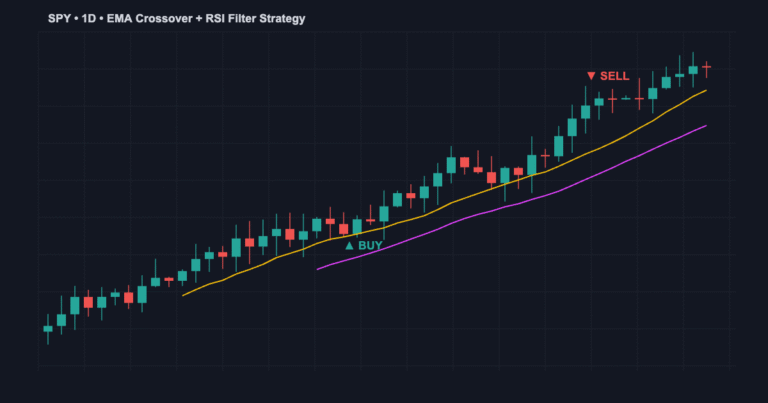
Logic: When the 9-period EMA crosses above the 21-period EMA, buy. When it crosses below, sell. Simple, effective, and one of the most popular strategies worldwide.
Best timeframe: 15-minute to Daily. Best for: Trending markets (Nifty, Bank Nifty, large-cap stocks). Typical win rate: 45-55% with favorable risk-reward.
Strategy 2: RSI Overbought/Oversold (Mean Reversion)
Logic: Buy when RSI(14) drops below 30 (oversold). Sell when RSI rises above 70 (overbought). A classic mean-reversion approach that works in range-bound markets.
Best timeframe: 1-hour to Daily. Best for: Sideways/choppy markets. Tip: Combine with support/resistance levels for higher accuracy.
Strategy 3: MACD Histogram Reversal
Logic: Buy when the MACD histogram turns from negative to positive (momentum shifting bullish). Sell when it turns from positive to negative.
Best timeframe: 1-hour to 4-hour. Best for: Momentum traders. Enhancement: Filter trades using a 200-period moving average for trend direction.
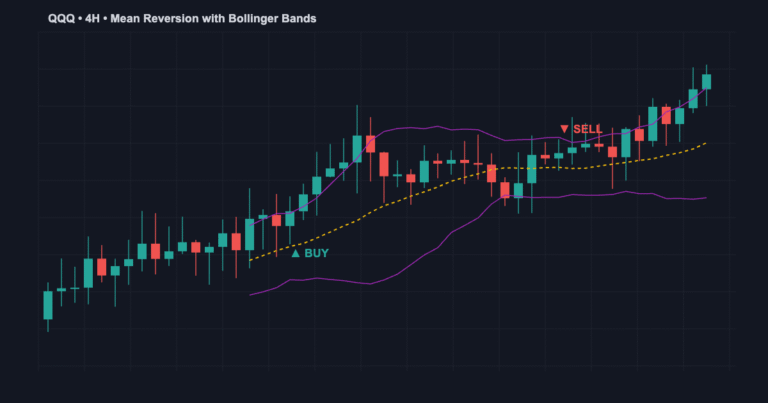
Strategy 4: Bollinger Band Squeeze
Logic: When Bollinger Bands narrow significantly (the “squeeze”), a big move is coming. Buy on breakout above the upper band, sell on breakout below the lower band.
Best timeframe: 15-minute to 1-hour. Best for: Breakout traders. Key metric: Bandwidth below 0.1 typically signals a squeeze.
Strategy 5: Supertrend
Logic: The Supertrend indicator flips between bullish (green) and bearish (red) based on ATR and a multiplier. Buy when it turns green, sell when it turns red.
Best timeframe: 15-minute to Daily. Best for: Trending instruments like Nifty futures. Default settings: ATR period 10, multiplier 3.0. Experiment with ATR 7-14 and multiplier 2.0-4.0.
Strategy 6: VWAP Deviation
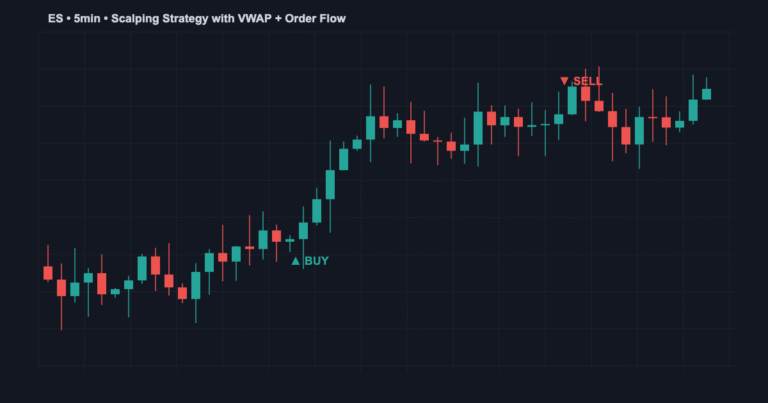
Logic: Buy when price drops 1-2 standard deviations below VWAP (undervalued intraday). Sell when it rises 1-2 standard deviations above VWAP.
Best timeframe: 5-minute to 15-minute (intraday only). Best for: Intraday mean-reversion on liquid stocks and indices. Note: VWAP resets daily—this is strictly an intraday strategy.
Strategy 7: Stochastic + RSI Combo
Logic: Buy when both Stochastic K crosses above D in oversold territory AND RSI is below 40. This dual confirmation reduces false signals.
Best timeframe: 1-hour to 4-hour. Best for: Swing traders wanting higher probability entries. Win rate improvement: Typically 10-15% better than either indicator alone.
Strategy 8: Ichimoku Cloud
Logic: Buy when price is above the cloud, Tenkan-sen crosses above Kijun-sen, and the cloud is green. A comprehensive trend-following system.
Best timeframe: Daily to Weekly. Best for: Position traders and swing traders. Advantage: Provides support/resistance, momentum, and trend in one indicator.
Strategy 9: ATR Trailing Stop
Logic: Enter on any signal (EMA cross, breakout, etc.) and use an ATR-based trailing stop. Stop = entry price minus 2x ATR. Trail the stop upward as price rises.
Best timeframe: Any. Best for: Managing exits on winning trades. Key benefit: Lets winners run while automatically cutting losers. Works as an add-on to any entry strategy.
Strategy 10: Volume Spike Breakout
Logic: Buy when price breaks above resistance AND volume is 2x or more above the 20-period average volume. Volume confirms the breakout is genuine.
Best timeframe: 15-minute to Daily. Best for: Breakout traders who want volume confirmation. Filter: Avoid breakouts during the first 15 minutes of market open (often false).
How to Customize These Strategies
Adjust Parameters: Every strategy has tunable inputs. Test different periods, multipliers, and thresholds on your specific instrument.
Add Filters: Combine strategies with trend filters (200 SMA), volume conditions, or time-of-day restrictions.
Add Risk Management: Every strategy needs stop losses and position sizing. Risk 1-2% of capital per trade maximum.
Backtest Thoroughly: Use TradingView’s Strategy Tester with realistic commission (0.05% for Indian brokers) and slippage settings. See our backtesting guide for details.
Frequently Asked Questions
Q: Are free strategies as good as paid ones?
A: Often yes. Most profitable strategies are based on simple, well-known concepts. Paid strategies usually add convenience, not profitability.
Q: Can I combine multiple strategies?
A: Absolutely. Multi-confirmation strategies (e.g., EMA cross + volume spike) typically have higher win rates than single-indicator approaches.
Q: Which strategy works best for Indian markets?
A: Supertrend and EMA Crossover are extremely popular among Indian Nifty/Bank Nifty traders. VWAP Deviation works well for intraday.
Q: How do I automate these strategies?
A: Convert them to Pine Script, add alerts, and connect via webhooks to your broker. See our webhook setup guide.
Conclusion
These 10 free Pine Script strategies cover every major trading approach—trend following, mean reversion, momentum, and breakout. Start with 1-2 strategies that match your trading style, backtest them rigorously, and customize for your preferred instruments. For automation setup, check our Zerodha automation guide and Upstox API guide.
About the Author